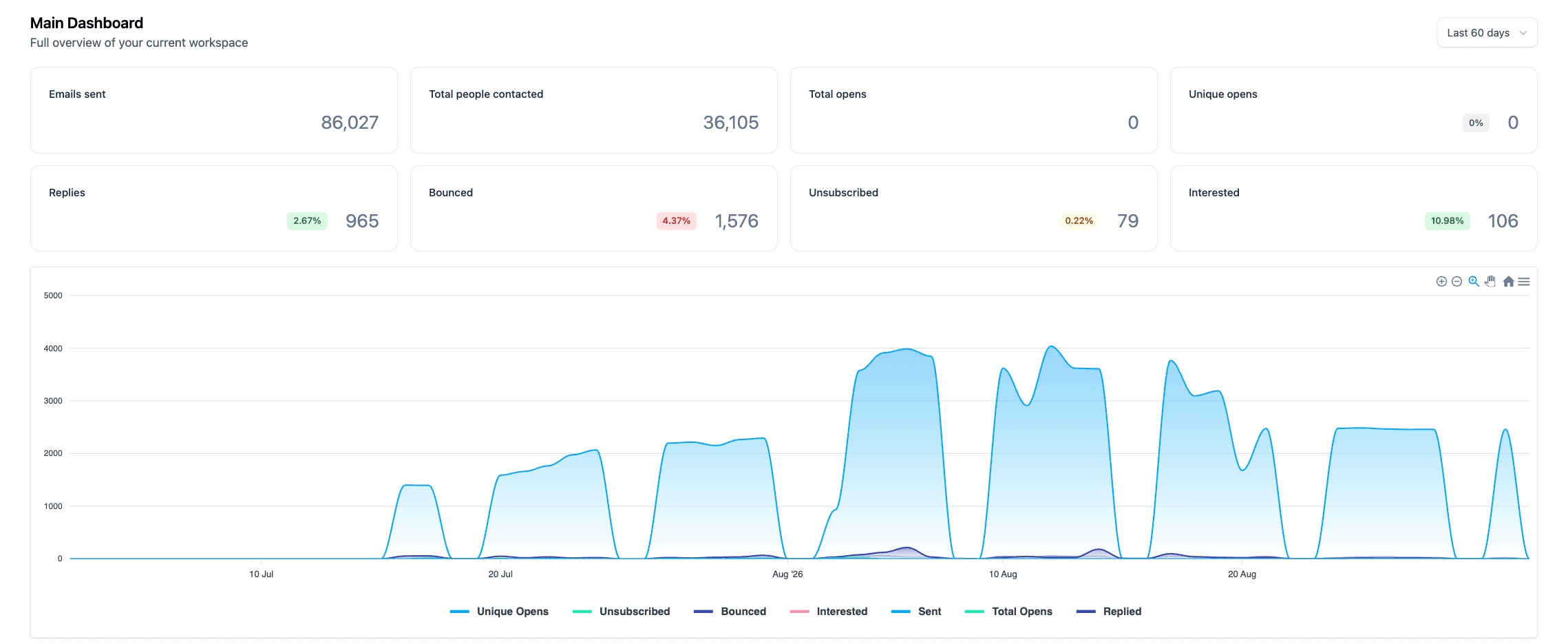
A behind-the-scenes look at how hundreds of agricultural data sources were researched, a custom prospect universe was built from scratch, multiple outbound campaigns were launched, and genuine interest was generated in a market largely absent from conventional B2B databases.
The client had developed an agricultural technology product and wanted outbound support around its fundraising and market-development efforts. The audiences included farmers, agricultural business owners, businesses directly or indirectly connected to agriculture, prospects relevant to the client's fundraising efforts, and agricultural prospects around a physical event.
The people the client wanted to reach were not sitting neatly inside conventional B2B databases. Farmers often had little or no LinkedIn presence, limited company information, and very little structured contact data online. Many of the email addresses that did exist were personal rather than conventional business emails.
We found commercial databases selling farmer data. But there were two problems: we had seen a gap before between how purchased databases were marketed and the actual quality of the records delivered, and agricultural datasets of this kind were expensive.
Rather than immediately spend heavily on a dataset we did not fully trust, we decided to build the market ourselves using custom research, scraping and our existing list-building stack.
The work was iterative. Every week involved some combination of researching agricultural data sources, finding new directories, testing databases, extracting records, cleaning data, validating records, finding additional routes into the market, and preparing usable audiences for campaign launch. Claude Code played a major role in researching, structuring and working through the available data sources.
After researching and scraping these sources, roughly 50,000 contacts became usable for outbound campaigns.
The raw extraction repeatedly produced data that looked valid until it was inspected closely:
Scraping data is not the same as building usable market data. The work was in validating what had actually been retrieved before it reached a campaign.
The client did not hand us a ready-made farmer database. The custom prospect universe became the actual foundation for the outbound program. We tested multiple audiences and eventually concentrated most heavily on two: farmers, and agricultural business owners — including businesses directly or indirectly connected to the agricultural economy.
This account behaved very differently from conventional B2B outreach. Many prospects had almost no meaningful digital footprint, which meant we could not rely on deep company research, social activity or large numbers of prospect-specific data points for every email.
So personalization had to reflect the reality of the market rather than pretending every farmer had a rich online profile. The solution became strong segmentation, market-specific messaging, repeated copy testing, multiple campaign variants and feedback-driven iteration.
In one campaign alone, roughly 10 copy variants had already been created, with five inactive at the point recorded. Copy was repeatedly adjusted based on how the market responded.
The client was hosting an in-person agricultural event. We built a separate campaign targeting people connected to agriculture and fitting the client's ICP within roughly 100 miles of the event location.
That campaign generated interested replies and event registrations — a different conversion objective from the standard outbound campaigns, and another use of the underlying market data.

Open tracking was disabled for this workspace, so this case study does not use open-rate claims anywhere. Unlike other accounts, these Interested replies were confirmed genuine interested prospects.
The normal outbound workflow involved inbox managers booking meetings directly through a calendar the outbound team could access and track. This account worked differently: the client wanted prospects sent through a separate landing page and handled the booking process through its own scheduling flow.
That meant we did not have a reliable source of truth for total meetings booked, meeting attendance, the final positive-reply-to-meeting conversion rate, or final attendance from event outreach.
So this case study does not invent or estimate a meeting number.
That reduced visibility and made conversion harder to manage. Warm calling was added as part of inbox management to improve the transition from interest to booked conversations. But it did not fully solve the problem because the underlying scheduling architecture remained outside the outbound team's control.
Tactics can improve conversion. They cannot fully repair a broken conversion path.
The work on this account looked less like buy-list-write-sequence-send, and more like a continuous process:
The campaign could only exist because the market was built first.
This case study documents work I personally performed and managed before founding Blinkins Media.
If your target market does not sit neatly inside conventional databases, we can map the market, build the audience and figure out the route in.
Talk to Blinkins →